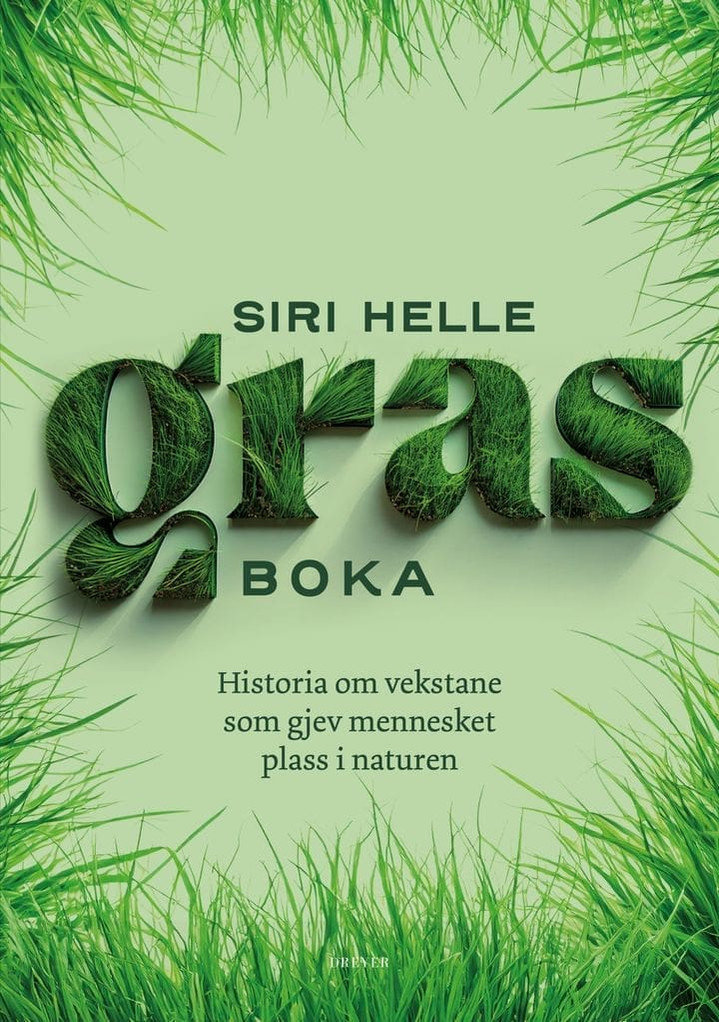
Without grass, there would be no humans.
Grass is everywhere: beneath our feet, on our plates, and woven into the landscapes that shapes who we are. Grasslands cover a third of the Earth’s land surface. Grass also provides nearly half of the food humanity consumes, and holds together some of the planet’s most complex ecosystems. And yet, grass has become almost invisible.
In The Book of Grass, Siri Helle takes readers on a remarkable journey into the history of the plants that made human life possible. From the ancient grasslands that welcomed our ape ancestors when the forests retreated, the hay meadows of Transylvania, the frozen tundra of Siberia and to the Norwegian mountain farms, she reveals how grass, grazing animals, and humans have shaped one another for millions of years.
But this is also a story about what is at stake. The world’s grasslands are among the most endangered ecosystems on Earth. Climate change, industrial agriculture, and population growth are pushing them to the brink. As grasslands disappear, so too do species, fertile soils, carbon stores—and vital connections between people and nature.
The Book of Grass shines a light on one of the world’s most influential yet overlooked life forms, revealing why our future may depend on rediscovering the living world that has sustained us all along.
The book is packed with fascinating facts, such as that grasses are found on every ice-free continent on Earth, and that a single grass plant can live for more than 400 years.
NRK
Charming! When life cuts deep, try some chainsaw mindfulness.
The Sunday Times, About Handmade